

The Ohio Native Tree Arboretum in Piqua in Full Display
By Matt Bayman | This Local Life
PIQUA – Tucked away in the southern part of Garbry Big Woods Reserve in Piqua is an area of the Miami County Park District dedicated to native Ohio trees.
After parking near the archery range and hiking along the Storybook Trail, you'll eventually reach the Ohio Native Tree Arboretum, where 28 numbered trees represent a sampling of the species that have long been part of Ohio's forests.
With the fall color change in action, now is a particularly good time to visit and see the trees in a completely different light. Come back often to watch the dramatic changes over the next few weeks. (See pics of the trees this week below)
Here are some fun facts to know before you go:
Sources: The Ohio State University Extension, ODOT, Woody Plants of Ohio, Ohio Division of Forestry, the Trees of Ohio Field Guide and the Miami County Park District
-
The Ohio Native Tree Arboretum is located within Garbry Big Woods Reserve at 6660 Casstown-Sidney Rd. in Piqua. The reserve is open daily from sunrise to sunset. It is a very short, flat hike to the arboretum.
-
28 native Ohio trees are featured in the arboretum.
-
The collection includes five species of oak: scarlet oak, bur oak, swamp white oak, red oak and shingle oak.
-
Oaks are wildlife powerhouses. Their acorns provide food for deer, squirrels, wild turkeys and many other woodland animals.
-
Shagbark hickory gets its name from its distinctive bark, which peels away from the trunk in long, shaggy strips.
-
Shagbark hickory produces edible nuts that are eaten by wildlife.
-
Sassafras is one of the easiest trees to recognize because its leaves can come in several shapes—including the familiar “mitten” shape.
-
Sweetgum has distinctive star-shaped leaves and produces the round, spiky seed balls often called “gumballs.”
-
Tulip poplar is not actually a poplar. It is a member of the magnolia family and gets its name from its tulip-shaped flowers.
-
American sycamore has distinctive pale, mottled bark that can make the trunk look almost white from a distance.
-
Ohio buckeye is the state tree of Ohio. Its shiny brown nuts are among the state's most recognizable natural symbols.
-
Black walnut produces large nuts that are an important food source for wildlife.
-
Black cherry produces small fruits eaten by birds and other wildlife.
-
Hackberry also produces fruit that provides food for wildlife, including birds.
-
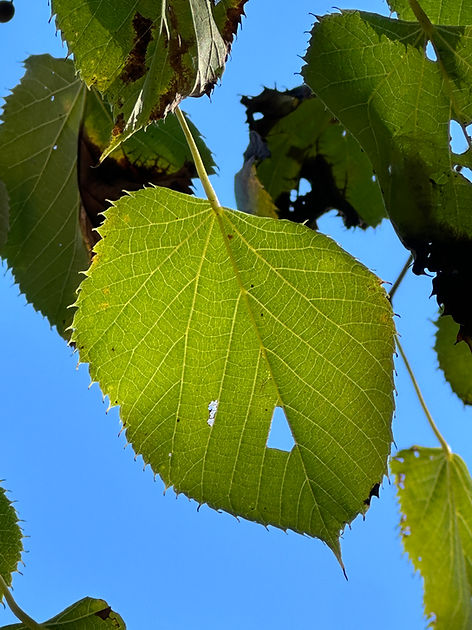
American basswood, also known as American linden, produces fragrant flowers that are an important source of nectar for bees and other pollinators.
-
Kentucky coffeetree has large, unusual seed pods. Its hard seeds were historically roasted and used as a coffee substitute.
-
Black locust produces fragrant white flowers that attract pollinators and has exceptionally durable wood.
-
Red maple is one of the trees responsible for some of Ohio's spectacular fall color, with leaves that can turn red, orange or yellow.
-
Sugar maple is another major fall-color tree and is the species associated with maple syrup production.
-
Green ash is included on the arboretum's list, along with a warning about the emerald ash borer, an invasive insect that has devastated ash trees across Ohio.
-
American beech can be recognized by its smooth, gray bark. Its nuts provide food for wildlife.
-
Bur oak produces some of the largest acorns of any North American oak.
-
Swamp white oak is adapted to wetter conditions, making it particularly suited to low-lying or poorly drained areas.
-
Blue ash is notable for its resistance to certain environmental stresses and gets its name from a blue-colored substance that can be produced from its inner bark when exposed to air.
-
Redbud isn't on this particular sign, but several of the trees here demonstrate how native species fill different niches — from wet soils to upland woods.
-
Trees aren't just scenery: they provide food, shelter and nesting habitat for birds and mammals, while their roots help stabilize soil.
-
Fallen leaves aren't simply “yard waste” in a forest. They return nutrients and organic matter to the soil as they decompose.
-
Different tree species support different insects, fungi, birds and mammals, meaning tree diversity helps create a more diverse ecosystem.
-
The arboretum is useful for learning to identify trees by leaves, bark, fruit, nuts and overall shape.
-
Fall is an especially good time to visit, because many of these species can be identified by their changing leaf colors.
-
But the trees can also be identified in winter, when their bark, buds, branching patterns and overall shapes become easier to see.
-
The arboretum is part of Garbry Big Woods Reserve, so visitors can combine the tree walk with the reserve's other trails and natural areas.
Here's some of what's taking place right now...