
Springing Back to Life - Wildlife in Miami County
As the Miami Valley thaws out from a long winter, these are just some of the animals you can find when exploring local parks, trails, streams and communities in the region. Photos by Matt Bayman

A Midland painted turtle at Kyle Park in Tipp City. They can remain underwater for up to 147 consecutive days without taking a single breath of air. During this time, they suppress their metabolism so low that their heart may beat only once every 5 to 10 minutes.

A blue heron at Greenville Falls in Covington. In Ohio, they nest in massive colonies called heronries or rookeries, often high up in sycamore trees.

Common Snapping Turtle at Brukner Nature Center in Troy. They can live up to 100 years!

Eastern spiny softshell turtle near the Great Miami Recreational Trail in Troy. They have a long, tubular, pig-like snout that acts as an organic snorkel, allowing them to breathe while remaining almost entirely buried in the mud or sand at the bottom of a river.

Eastern wild turkeys. Seen along Iddings Rd in West Milton. Outside of the spring breeding season, males often form "bachelor groups" like this one.

An immature Double-crested Cormorant along the Hydraulic Canal in Piqua. Once rare due to pesticides, their populations have significantly recovered in Ohio. They are now commonly seen along the Great Miami River.

Eastern Chipmunk, the only species of chipmunk found in Ohio along the Great Miami Recreational Trail in Tipp City. They live in complex burrow systems that can be over 10 feet long and include separate "rooms" for sleeping, food storage, and waste.


A rusty crayfish at Stillwater Prairie Reserve in Covington. It's an invasive species that is known to "aggressively evict" native crayfish from the best hiding spots under rocks, leaving the natives exposed to predators like bass. They have been known to pinch human toes!!!

An American Toad sitting on a Chanterelle mushroom, also sometimes called a toadstool at Maple Ridge Reserve in Covington.

A Common Five-lined Skink at Garbry Big Woods Sanctuary in Piqua. They are able to "drop" their tail if a predator grabs it. The detached tail will continue to wiggle to distract the attacker while the skink escapes.


A Northern Leopard Frog at Stillwater Prairie Reserve in Covington. If you're out by the water in the spring, listen for a long, rattling snore followed by several stuttering "chuck-chuck-chuck" sounds. That's their mating call!

A Webb's Globe Snail at Garbry Big Woods Sanctuary in Piqua. During the winter, these snails pull themselves deep into their shells and hibernate until the weather warms up in the spring.
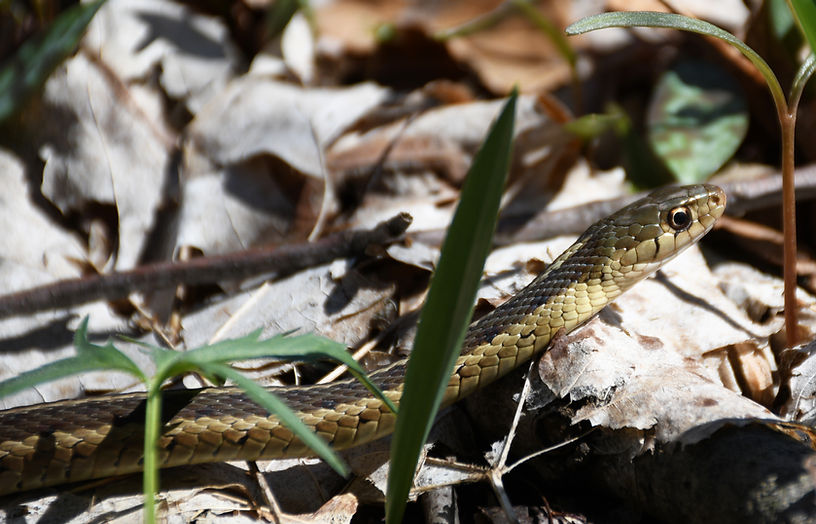
An eastern Garter snake at Garbry Big Woods Sanctuary in Piqua. These snakes are non-venomous and completely harmless to people and pets.

An Imperial Moth caterpillar at Charleston Falls Preserve in Tipp City. The row of yellow-white spots down their sides are actually spiracles, external openings used for breathing!